

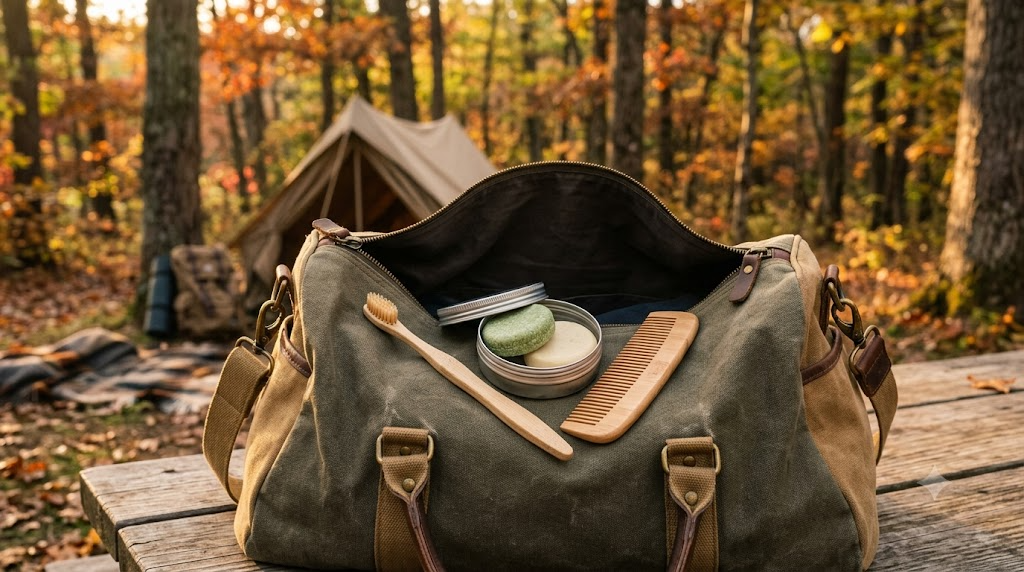
There's a decent case that fall is actually the best time to camp all year. The bugs are gone, the crowds have thinned out, and there's something about a cold morning and a warm cup of coffee at a campsite that summer just can't replicate. But fall camping does come with a few practical differences that are easy to overlook if your packing list hasn't changed since July — shorter daylight hours, colder overnight temperatures, and often less reliable access to running water as seasonal campgrounds start closing down facilities for the year. None of that means camping season is over. It just means your personal care kit needs a slightly different approach than the one built for a summer lake trip.
This is a practical guide to putting together a compact, genuinely plastic-free personal care kit for fall camping specifically — not a general packing list repurposed from summer, but one built around the actual conditions a fall trip creates.
It's also worth saying up front that "fall camping" covers a wide range of trips — a single crisp weekend at a state park, a longer backcountry trip before the first real cold snap, or a final car-camping trip before storing the gear for winter. The kit below scales to any of those, since the core problems (less water, colder nights, tighter pack space) show up across all of them, just to varying degrees.
Why a Fall Camping Kit Needs to Be Different From a Summer One
Summer camping kits get built around heat, sweat, and long days at the water. Fall kits need to solve for a different set of problems: less daylight to get ready by, colder mornings that make a quick routine more appealing than a long one, and — depending on the campground — less certainty about whether a shower house or spigot will even be open. Many seasonal campgrounds start winterizing water systems by mid-to-late fall, which means the kit that worked fine in July needs to be more self-sufficient by October.
That shift in conditions is exactly why compact, low-water, genuinely durable pieces matter more on a fall trip than they might in peak summer. A kit that depends on a long shower and unlimited running water is a kit built for the wrong season once the weather turns.
The Core Kit: Toothbrush, Floss, and Tooth Tablets
The basics don't change by season, but a fall trip is a good excuse to make sure they're actually packed right. A bamboo toothbrush takes up virtually no space in a pack and, unlike a plastic one, doesn't add to the pile of broken campsite plastic that tends to accumulate at the bottom of a duffel bag by the end of a season of trips. Solid bamboo also holds up well to the temperature swings a pack goes through in a fall vehicle — cold mornings, a warm car interior by afternoon — without the material becoming brittle the way some plastics can in repeated cold-to-warm cycles. That resilience traces back to bamboo's natural density and fiber structure, which the American Bamboo Society notes gives many species a strength-to-weight ratio that holds up under conditions that would degrade softer, lighter materials over repeated seasons of use.
Tooth tablets solve a real fall-camping problem: a squeeze tube of toothpaste can freeze solid on a cold night and take a while to thaw out again the next morning, while individual tablets aren't affected the same way. And a bamboo floss refill pack or a spool of organic bamboo floss takes up less room than a bulky plastic dispenser, which adds up when pack space is already tight for cold-weather layers.
Washing Up Without Reliable Running Water
This is the biggest practical difference between a summer and fall camping kit. When a shower house is closed or water access is limited, a bar-based routine works far better than a bottle-based one. A charcoal shampoo bar needs only a small amount of water to lather, doesn't risk spilling or freezing in a pack the way a liquid bottle can on a genuinely cold night, and lasts through many washes — useful on a multi-day trip where restocking isn't an option.
A sisal soap bag keeps a bar of soap contained, ventilated, and mess-free in a pack, which matters even more on a fall trip when a soap bar might not fully dry out between uses in cooler, damper conditions. Pairing it with an all-natural loofah sponge gives a quick, efficient way to clean up with minimal water — useful when a "shower" on a fall trip might really mean a basin of water heated over a camp stove rather than an actual shower stall.
The Plastic Pollution Coalition has noted that outdoor recreation areas are particularly vulnerable to plastic waste that doesn't get properly hauled out, since remote sites often lack the same waste infrastructure as a city — which makes a genuinely low-waste kit more than just a personal preference on a camping trip, especially in fall when fewer staff may be around to manage cleanup at a winding-down campground.
Small Space-Savers That Actually Matter on a Fall Trip
Pack space gets tighter on a fall trip once cold-weather layers, a heavier sleeping bag, and extra socks are factored in, which makes compact personal care items more valuable than they'd seem on a warm-weather trip with a lighter pack. A bamboo facial rounds holder keeps a small stack of reusable rounds from getting crushed loose at the bottom of a bag, which matters for anyone using them for a quick end-of-day face wipe-down after a day of hiking.
Bamboo cotton ear buds are an easy thing to forget on a packing list but genuinely useful after a windy fall hike, and a small bamboo toothbrush holder keeps a toothbrush from rattling loose against everything else in a shared toiletry bag — a small detail, but one that matters more in a cramped tent vestibule than it does at home.
Packing It All Down for a Multi-Day Trip
For longer fall trips, a sisal exfoliating glove packs flatter than a bulky loofah and dries faster overnight in a cold tent, which matters when there isn't a warm bathroom to hang things up in between uses. And for anyone camping longer than a weekend, a compact bamboo paddle hairbrush is a small addition worth the space, especially after a few days without easy access to a mirror or a proper sink.
The Eco-Cycle has emphasized that packable, reusable systems tend to hold up better across repeated outdoor trips than single-use travel-size products, which are easy to lose track of, hard to recycle properly once opened, and often end up half-used and discarded after just one trip. A kit built around a handful of durable, reusable pieces solves that problem by design — pack it once, and it's ready again for the next trip without restocking anything disposable in between.
That "pack it once" approach is worth taking seriously heading into the last stretch of the outdoor season. A kit assembled now doesn't just serve the next fall trip — it's ready to go for a quick winter overnight, a spring shoulder-season trip, or whatever the next opportunity to get outside turns out to be, without needing to be rebuilt from scratch each time the weather shifts.
A Few Myths About Packing Personal Care for Fall Camping
"A fall camping kit is basically the same as a summer one, just with warmer clothes added." Not quite — colder temperatures, shorter daylight, and reduced water access at many campgrounds change what actually works well in a kit, not just what gets worn over it.
"Bar soap and shampoo bars don't lather well in cold water." They lather with less water than people expect, and a small amount of friction in the hands before applying it to hair or skin closes most of the gap people notice in genuinely cold conditions.
"Bamboo products get brittle or crack in cold weather." Properly finished solid bamboo tolerates temperature swings well — it's a dense, naturally durable material that doesn't become brittle the way some plastics can after repeated cold-to-warm cycling in a car or pack.
"You need travel-size disposable products for a trip this short." A compact set of reusable pieces — a bar of soap, a small toothbrush, a travel holder — takes up comparable space to disposable minis, without leaving anything behind to throw away at the end of the trip.
"Fewer camping trips this time of year means it's not worth optimizing the kit." Fall is often when the best, quietest camping happens precisely because fewer people bother — which makes it worth getting the kit right rather than treating it as an afterthought.
"Wet gear won't dry properly on a cold fall trip anyway, so material doesn't matter." It actually matters more — natural fiber pieces like a loofah or exfoliating glove dry faster than synthetic ones, which is a real advantage when there's no warm, dry place to hang things up overnight.
Frequently Asked Questions
What's the biggest difference between packing for summer and fall camping personal care? Reduced water access and colder temperatures are the two biggest factors — a fall kit should lean on low-water, bar-based products and materials that hold up well to temperature swings.
Do tooth tablets really work better than toothpaste in cold weather? Yes — a squeeze tube of toothpaste can partially freeze and become hard to use on a cold night, while individual tablets aren't affected by temperature the same way.
How do I wash up on a fall trip if the campground shower house is already closed for the season? A shampoo bar and a basin of water heated over a camp stove handles most of what a shower would, using a fraction of the water and none of the infrastructure.
Are natural fiber items like loofahs and exfoliating gloves worse for cold-weather camping? No — if anything, they dry faster than synthetic alternatives, which matters more in fall when there isn't always a warm space to hang wet gear between uses.
Does bamboo hold up to being packed in a cold car overnight? Yes — solid bamboo is a dense, stable material that tolerates temperature swings well, without the brittleness some plastics develop after repeated cold exposure.
What's the most space-efficient way to pack a personal care kit for a multi-day fall trip? Favor compact, multi-use pieces — a soap bag that also ventilates the bar inside it, a small holder that protects a toothbrush from the rest of the bag — over single-purpose travel bottles.
Is it worth bringing a hairbrush on a shorter fall camping trip? For a weekend, it's optional, but for anything longer than a few days, a compact paddle brush earns its small amount of pack space, especially without easy access to a mirror or sink.
How do I keep a soap bar from turning into a mess in my pack on a damp fall trip? A ventilated soap bag keeps a bar contained and lets it dry between uses, which matters more in fall's cooler, often damper conditions than it does in a dry summer pack.
Fall camping rewards a little extra thought in the packing list, and the personal care kit is one of the easiest places to get it right. A compact set of bamboo and natural-fiber pieces handles cold mornings, limited water access, and a tighter pack all at once — without leaving anything disposable behind at a campsite that, this time of year, might not have anyone around to clean it up until spring.
🌿 Continue Your Journey
Enjoyed this article? Here are three ways to take the next step:
🌱 Make The Bamboo Switch™ Learn how one small change can create lasting impact.
🌎 Made The Bamboo Switch™ Join a growing community choosing progress over perfection.
🤝 Become a Bamboo Switch Guide Help others discover thoughtful, sustainable living while earning rewards.
Share:
Fall Harvest Table: Setting a Zero-Waste Kitchen for Autumn Entertaining
Halloween Weekend Bathroom Survival Guide: Quick Swaps for a Busy House